
Oral and Dental Health
Why Is Oral and Dental Health Important?
Dental problems experienced at an early age may lead to the loss of many teeth at later ages. The importance of oral and dental health becomes especially evident at this point. In many Western countries, Preventive Dentistry has been included in health policies, and regular general dental check-ups have become almost mandatory from childhood, aiming to diagnose and treat problems that may threaten oral and dental health in a timely manner. It should not be forgotten that routine dental check-ups every 6 months make it possible to receive more economical and simpler dental treatments.
Common Dental Problems
Common dental problems related to oral and dental health generally include the following: toothache, tooth decay, bad breath, gum recession, gum bleeding, missing teeth, dental aesthetics, teeth grinding, and root canal treatment. These problems are most commonly seen in individuals who have not received preventive dental care, do not perform regular oral care, and do not attend routine dental check-ups. The primary way to prevent common dental problems is to obtain accurate information through a general dental examination.
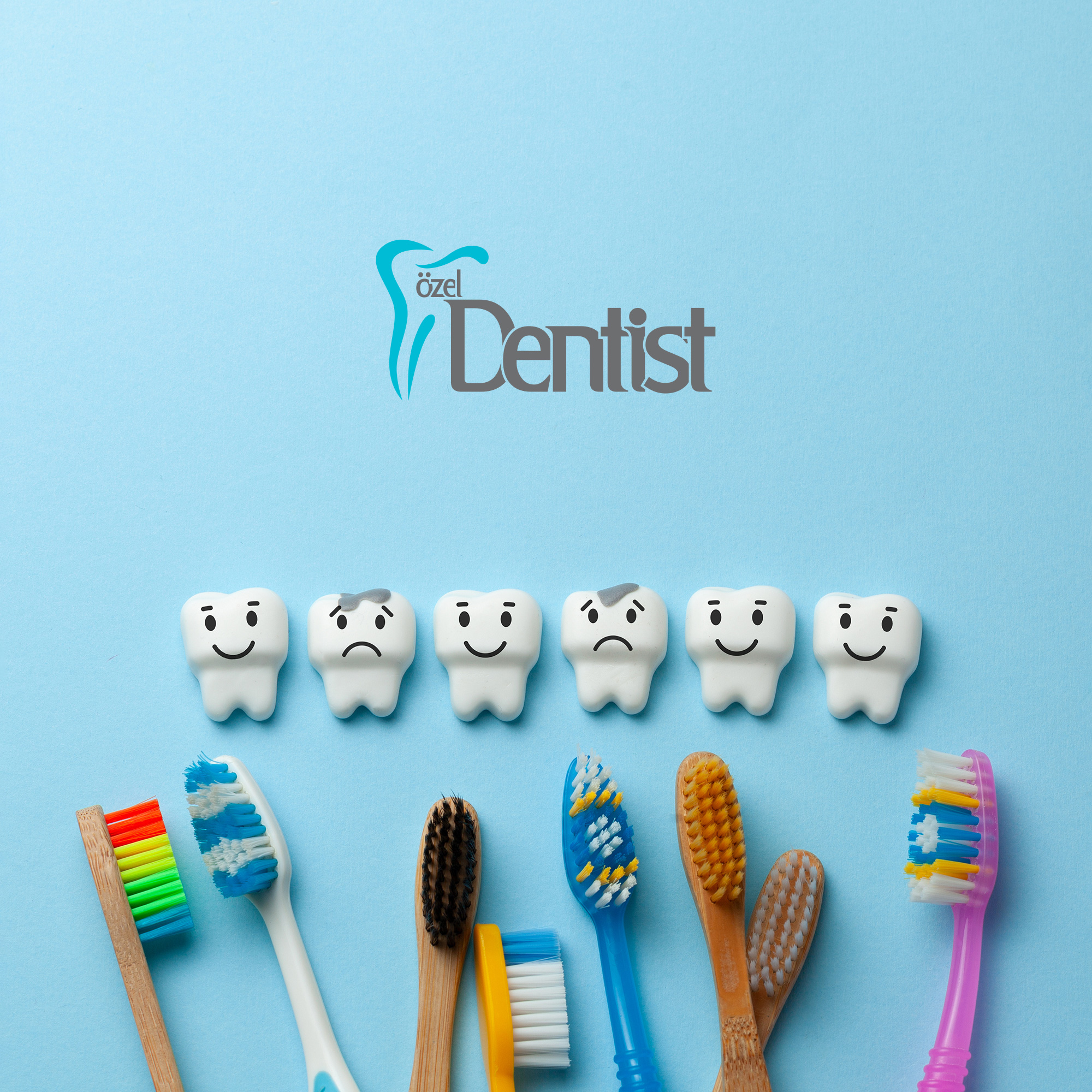
Please remember that the cause of cavities, gum diseases, and tartar is the failure to properly clean food residues and bacterial layers (dental plaque) that accumulate on the teeth after meals. If teeth are not cleaned with sufficient frequency, duration, and proper technique, encountering various problems becomes inevitable. Dental plaque that is not adequately cleaned after meals causes the oral environment to become acidic over time, leading to bacterial growth and consequently tooth decay and gum diseases. Tartar forms as dental plaque hardens over time by combining with minerals found in saliva.
How Is a General Dental Examination Performed?
To diagnose and treat any oral and dental health problems in a timely manner, it is necessary to have routine dental check-ups every 6 months. Today, families are increasingly visiting dentists with greater awareness in this regard. During a general dental examination, existing teeth, gums, and all oral tissues can be examined visually, manually, and through dental X-rays. This allows necessary dental fillings and tartar cleaning to be performed, and the causes of bad breath to be identified if present.
During routine dental examinations, you may bring along the oral care products you use (toothbrush, toothpaste, dental floss, interdental brush, etc.) to help give your dentist better insight.
What Should Proper Oral Care Be Like?
Anyone who attends routine dental check-ups every 6 months and completes their dental treatments should be knowledgeable about proper oral care in order to maintain oral and dental health. To avoid issues such as bad breath in social life, it is essential to have regular tartar cleaning during dental check-up visits. In your home oral care routine, do not forget to practice correct tooth brushing, choose the right toothpaste and dental floss, and include the toothbrush recommended by your dentist.
Tooth Brushing and Dental Floss Use
The golden key to dental health is, first and foremost, routine dental check-ups followed by proper oral care at home. Proper daily oral care at home, supported by tools such as tooth brushing, dental floss, oral irrigators, interdental brushes, and mouthwash, will help maintain a high level of oral hygiene. This will result in a healthier oral flora free from bad breath and tooth decay. You can receive guidance and information on correct tooth brushing and dental floss usage from your dentist during routine check-ups.
By brushing our teeth, we essentially perform mechanical cleaning. The main goal is to remove food residues left on the teeth by using a toothbrush suitable for you and ensuring contact with all tooth surfaces. Toothpaste facilitates this cleaning process through its foaming effect and provides protection against cavities and gum diseases with its active ingredients.
Even when tooth brushing is performed correctly, it cannot reach food residues trapped between the teeth. In such cases, complete cleaning is not possible. By using dental floss, you can thoroughly clean the interdental areas that toothbrush bristles cannot reach, contributing to better oral and dental health.
For proper cleaning of the mouth and teeth:
- Teeth should be brushed after every meal (at least 3 times a day)
- Teeth should be brushed correctly and for at least 3 minutes
- Teeth must be brushed before going to bed at night
- Dental floss should be used once a day to clean between the teeth
- Mouthwash should be used at least once a day
- Those with gum recession or who use dentures should clean with an interdental brush
Bad Breath and Prevention Methods
Bad breath may be caused by tooth decay, gum diseases, and infections. Through a general dental examination, the source of bad breath should first be identified, and then eliminated with treatments recommended by the dentist. In addition, routine dental check-ups every 6 months should not be neglected. Bad breath recurrence can also be prevented by maintaining proper oral and dental care at home.
Choosing an Oral and Dental Health Center in Istanbul
For your routine 6-month dental check-ups, preventive dental treatments, teeth whitening, dental aesthetics, dental cleaning, gum treatments, dental fillings, zirconium crowns, dental implants, and dental surgery procedures, you may choose private dentist oral and dental health clinics as your oral and dental health center in Istanbul. For your search for a dentist in Istanbul, private dentist clinics with experienced and specialized staff will also meet your needs for Kadıköy dentists, Acıbadem dentists, Kartal dentists, and Maltepe dentists.
Dentist Saliva
Saliva, a colorless, fluid liquid with a special consistency produced by the preauricular, submandibular and sublingual glands, is transported from the glands where it is produced to the oral cavity via small canals.
Dentist Structure and Functions of Teeth
It is the hardest substance in the body. It surrounds the tooth as an outermost protective layer. It is not sensitive because it does not contain nerve cells.
Dentist Sensitive Teeth
It occurs when the dentin layer of the tooth is exposed. Normally, the dentin layer is covered by enamel above the gum line and cementum below.

Copyright 2026 Dentist Dental Clinic. Web Design RED Agency All rights reserved.
Copyright 2026 Dentist Dental Clinic. Web Design RED Agency All rights reserved.