
Pedodontics
Pedodontics: Pediatric Dentistry and Primary Tooth Treatments
Pediatric dentistry aims to protect permanent teeth by monitoring primary teeth and performing timely treatments such as fillings, root canal therapy, or space maintainers on primary teeth when necessary.
What Is Pedodontics? Who Is a Pediatric Dentist?
“Pedo” means child and “dontics” refers to dentistry in Latin.
A pediatric dentist is a dentist who provides oral and dental care for children aged 0–16, explains and performs necessary treatments in a fun, non-traumatic way, using language appropriate for children.
When Should a Child’s First Dental Examination Be Performed?
The World Health Organization (WHO) recommends that a dental examination be performed within one year after the eruption of the first tooth (approximately between 6 months and 1 year of age).
The eruption of primary teeth is usually completed between the ages of 2 and 3. Dental examinations during this period help parents gain knowledge about proper nutrition, correct brushing techniques, and the future teething process.
Factors such as breastfeeding habits, bottle and pacifier use, and thumb sucking may require dental advice in terms of cavity formation and jaw development.
Primary Tooth Treatments and Their Importance
Primary teeth play a critical role in children’s oral health and jaw development. They are directly involved in chewing and speech functions and are essential for overall oral health. If a cavity in a primary tooth is left untreated, it may cause infection and damage the underlying permanent tooth.
Another important function of primary teeth is guidance. They ensure that permanent teeth erupt in the correct position and at the proper time. Early loss of primary teeth may disrupt the space needed for permanent teeth, leading to dental crowding in the future.
Primary teeth are also important for children’s social and psychological development. Children with healthy and attractive teeth tend to be more confident in social environments.
For all these reasons, primary teeth also require treatment. Especially between the ages of 2 and 6—when brushing and dietary habits are not fully developed and primary teeth remain in the mouth until ages 11–12—simple and controlled treatments should be performed when needed, without resorting to more radical procedures such as root canal treatment, extraction, or pulpotomy.
Preventive Applications
The biggest difference between pediatric dentistry and adult dentistry is the much greater importance placed on preventive treatments.
How Should Children Brush Their Teeth?
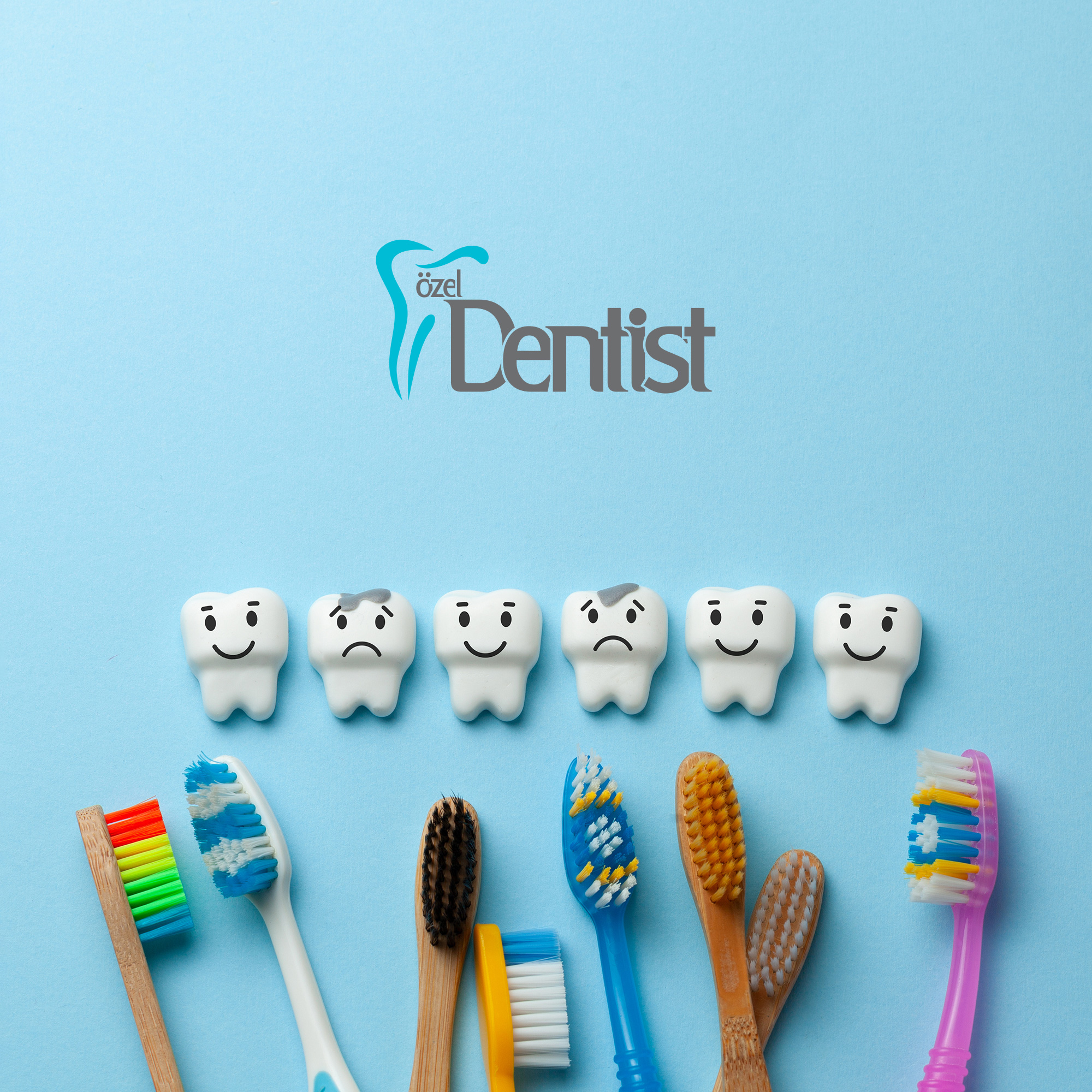
Oral cleaning should begin when the baby is 6–8 months old, when the first teeth appear in the mouth. After breakfast and before bedtime, at least the chewing surfaces of the teeth should be gently wiped clean using a damp gauze or clean cloth.
The use of a toothbrush is appropriate after the eruption of the back teeth, usually around 2.5–3 years of age.
It is very difficult to enforce a specific brushing technique in preschool children. At this age, the main goal is to establish the habit of tooth brushing. Children often brush only the visible or easily accessible surfaces of their teeth. However, to prevent cavities, the interproximal and chewing surfaces must be cleaned thoroughly. Therefore, parental supervision after brushing is recommended.
Toothbrushes suitable for the child’s mouth size, made of soft nylon bristles, should be used. Hard toothbrushes are not suitable as they may wear down the teeth. Just as sweeping cannot be done with a worn broom, teeth cannot be properly brushed with an old toothbrush. Toothbrushes should be replaced as soon as the bristles wear out (on average every 6 months).
Effective brushing for three minutes after breakfast and before bedtime is sufficient. Like all good habits, tooth brushing should be acquired during childhood.
The care of primary teeth is at least as important as that of permanent teeth. Decayed primary teeth can cause pain, chewing difficulties, and an unattractive appearance. This not only disrupts the child’s nutrition but may also lead to social discomfort and teasing among peers.
In addition, advanced decay may cause infection at the root tip of the tooth. This infection can negatively affect the child’s general health and may also damage the permanent tooth developing beneath the primary tooth. Early extraction of primary teeth due to decay can cause permanent teeth to erupt crookedly and may lead to the need for orthodontic treatment in the future.
Dentist Eating Problems
Dentist Baby Bottle Tooth Decay

Copyright 2026 Dentist Dental Clinic. Web Design RED Agency All rights reserved.
Copyright 2026 Dentist Dental Clinic. Web Design RED Agency All rights reserved.